
Androgenetic alopecia, commonly known as pattern baldness, affects both men and women. At the core of this condition is Dihydrotestosterone (DHT)—a potent androgen derived from testosterone via the action of the enzyme 5-alpha reductase (5-AR). When excess DHT binds to receptors in genetically sensitive hair follicles, it causes follicular miniaturization, progressively thinning the hair shaft until growth stops entirely.
While topical hair serums and treatments target scalp circulation, addressing internal hormonal balance through nutrition is equally critical. In this clinical guide, Monu Grewal, Registered Pharmacist certified by the Haryana State Pharmacy Council, breaks down the top 10 natural DHT blocker foods that help inhibit 5-alpha reductase and support root-level hair recovery.
1. How Foods Can Naturally Block DHT
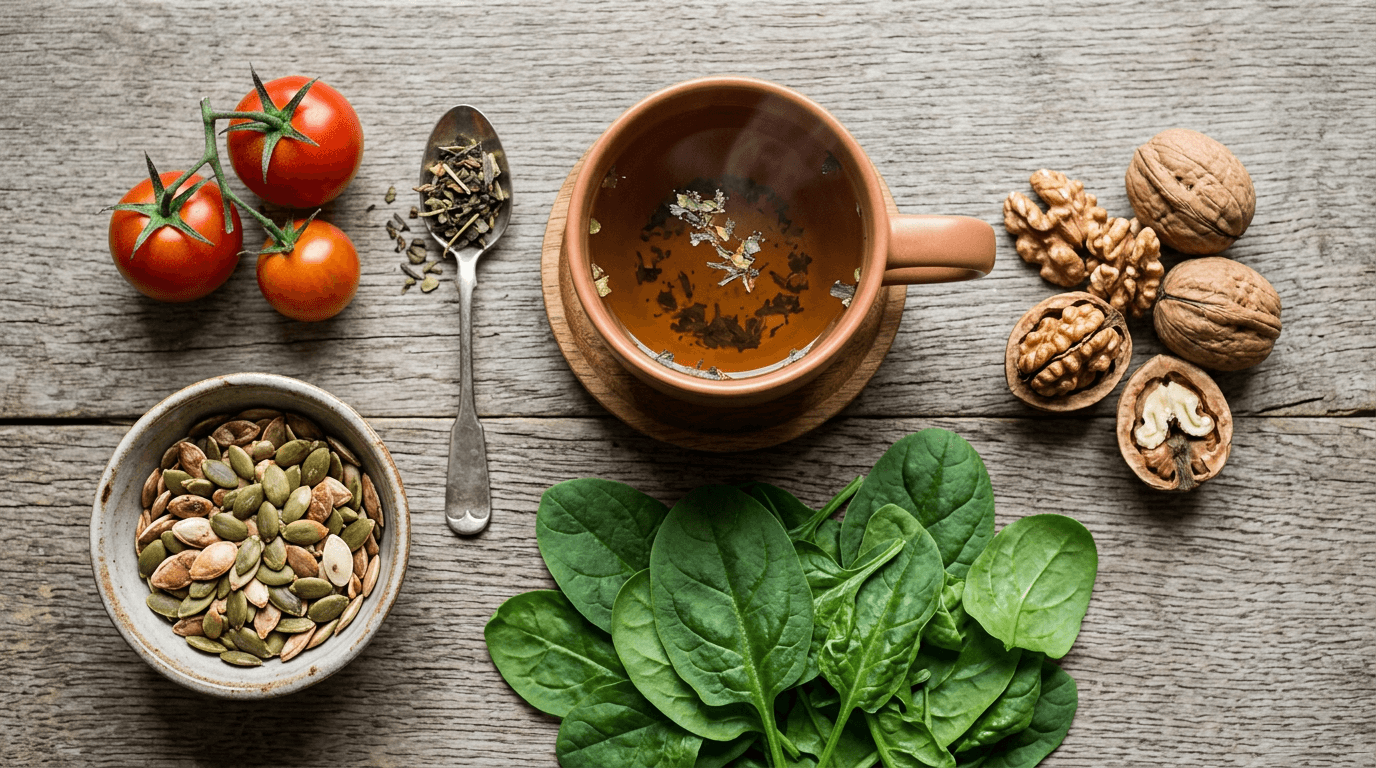
Certain plant-based nutrients, vitamins, and minerals contain natural 5-alpha reductase inhibitors, antioxidants, and anti-inflammatory compounds. By incorporating foods rich in zinc, lycopene, quercetin, and phytosterols into your daily diet, you can help reduce systemic DHT production and protect hair follicles from hormonal miniaturization.
2. Top 10 Natural DHT Blocker Foods
1. Green Tea (Rich in EGCG)
Green tea contains high concentrations of Epigallocatechin Gallate (EGCG), a powerful polyphenol antioxidant. Clinical studies demonstrate that EGCG helps inhibit the 5-alpha reductase enzyme, thereby reducing the systemic conversion of testosterone into DHT and protecting hair dermal papilla cells.
2. Pumpkin Seeds (Phytosterols & Zinc)
Pumpkin seeds are one of the richest natural sources of delta-7-sterine and zinc. Phytosterols compete with DHT for androgen receptor sites on hair follicles, while zinc plays a vital role in regulating hormone synthesis and maintaining hair tissue repair.
3. Tomatoes (Lycopene-Rich)
Tomatoes are packed with lycopene, a potent antioxidant that gives them their vibrant red color. Lycopene helps inhibit 5-alpha reductase activity and neutralizes free radicals that cause oxidative damage to hair bulbs and scalp capillaries.
4. Onions and Garlic (Quercetin)
Onions and garlic are rich sources of quercetin, a natural flavonoid that blocks the conversion of testosterone to DHT. Additionally, their high sulfur content supports the cross-linking of keratin proteins, strengthening the structural integrity of the hair shaft.
5. Spinach and Dark Leafy Greens
Spinach provides essential micro-nutrients including iron, folate, and vitamins A and C. Iron improves oxygen transport via hemoglobin to hair follicle roots, preventing the hypoxic environment in which DHT thrives and causes shedding.
6. Turmeric (Curcumin Compounds)
The active bioactive compound in turmeric, curcumin, has been shown to decrease DHT levels by downregulating 5-alpha reductase expression. Its potent anti-inflammatory properties also soothe micro-inflammation around suffocation-prone hair bulbs.
7. Nuts (Walnuts and Almonds)
Almonds and walnuts supply L-lysine, omega-3 fatty acids, and zinc. L-lysine works synergistically with natural DHT blockers to enhance their absorption and reinforce hair root anchoring within the dermal layer.
8. Mushrooms (Reishi and Shiitake)
Certain mushroom varieties contain bioactive compounds that demonstrate natural 5-alpha reductase inhibitory activity in clinical screenings, making them a valuable dietary addition for androgen management.
9. Carrots (Beta-Carotene & Vitamin A)
Rich in beta-carotene, carrots assist the scalp in producing healthy sebum levels. Natural sebum moisturizes the scalp environment and prevents calcification, which otherwise restricts capillary flow and accelerates DHT-induced miniaturization.
10. Flaxseeds and Chia Seeds (Lignans & Omega-3)
Flaxseeds contain high amounts of plant lignans, which bind to estrogen and androgen receptors, helping balance circulating hormone levels and preventing excessive DHT binding at the hair follicle level.
3. Food vs. Topical Ayurvedic Therapies: The Complete Approach
| Hair Recovery Approach | Primary Role | Targeted Benefit |
|---|---|---|
| DHT Blocker Foods | Internal Hormonal Balance | Reduces systemic 5-AR enzyme activity |
| Topical Herbal Serums | External Root Activation | Stimulates micro-circulation & stem cells |
| Swarna Bhasma Shilajit | Cellular Rejuvenation | Enhances nutrient absorption & vital energy |
While eating a nutrient-dense diet rich in natural DHT blocker foods provides a strong internal foundation, severe or progressive hair thinning often requires targeted, clinical-grade topical intervention. Combining a balanced diet with a complete, pharmacist-formulated regimen—such as the Dr. Grewal Advanced Hair Regrowth Kit—ensures both internal systemic support and direct external follicle stimulation.
4. Conclusion
Incorporate green tea, pumpkin seeds, tomatoes, onions, and zinc-rich nuts into your everyday meals to help naturally manage DHT levels. By pairing a DHT-conscious diet with clean, chemical-free Ayurvedic hair care, you create the optimal environment for sustainable hair growth and density.
Disclaimer: This article is authored by Registered Pharmacist Monu Grewal for educational purposes. Consult a certified physician or nutritionist for personalized dietary advice.
